Plan across the year
Build rotation-based schedule drafts for selected periods months ahead, while keeping each published calendar clear and reviewable.
01 / Law enforcement scheduling
IRON43 brings schedules, staffing context, leave, training, and operational events into one focused workspace for sheriff’s offices, police departments, and public-safety agencies.
02 / The published schedule
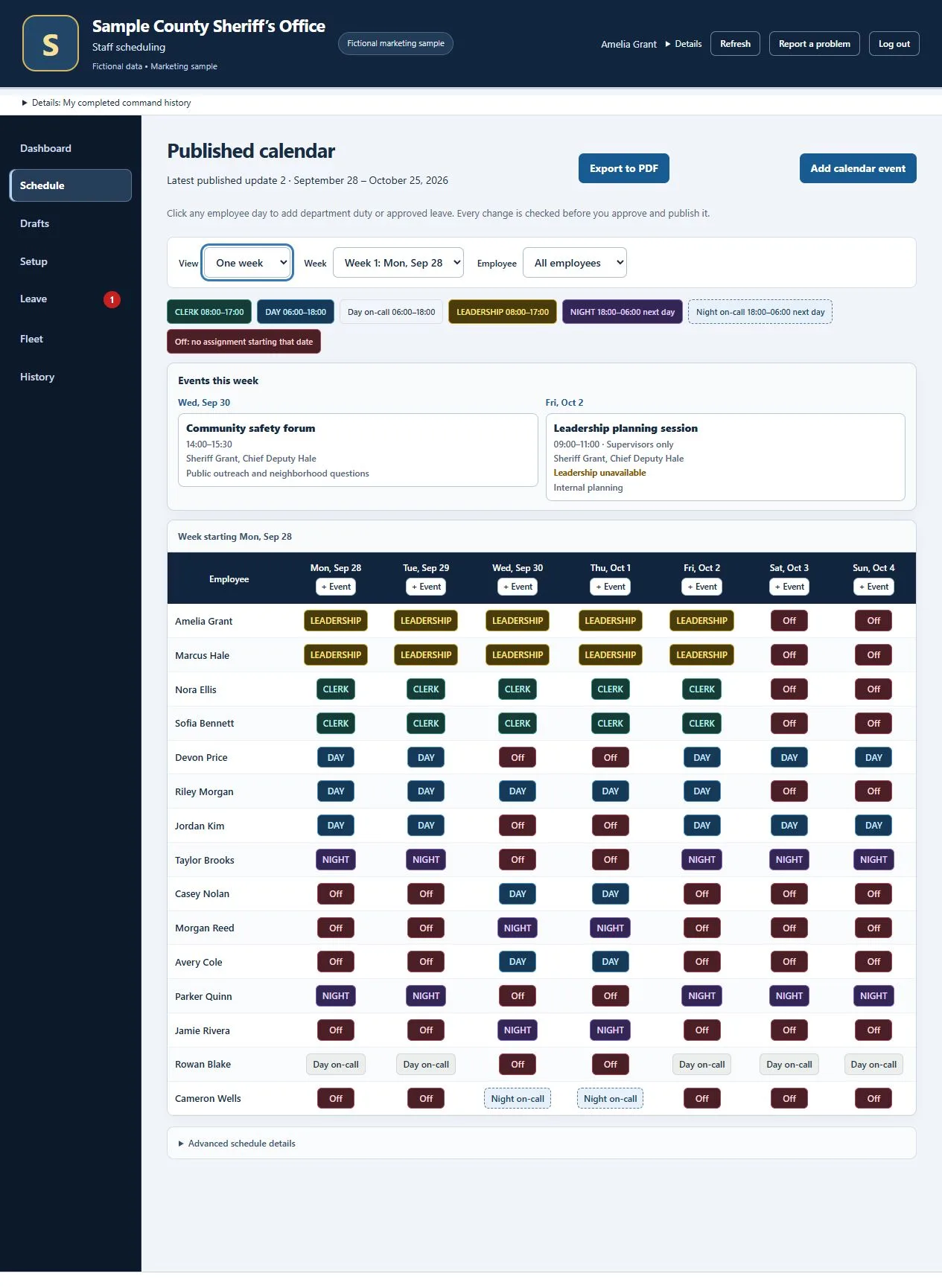
A clear weekly calendar keeps day and night shifts, on-call coverage, leadership assignments, and days off legible without flattening the details that matter.
03 / Built for operations
The schedule is the center of the workflow—not an isolated grid. Supervisors can see staffing, planned duties, and approved time away while preparing the next published version.
Build rotation-based schedule drafts for selected periods months ahead, while keeping each published calendar clear and reviewable.
Supervisors can prepare changes without disrupting the schedule employees already rely on, then publish when the next version is ready.
Review who is working, off, on call, or assigned to a specialized role, with coverage and overlap findings visible to supervisors.
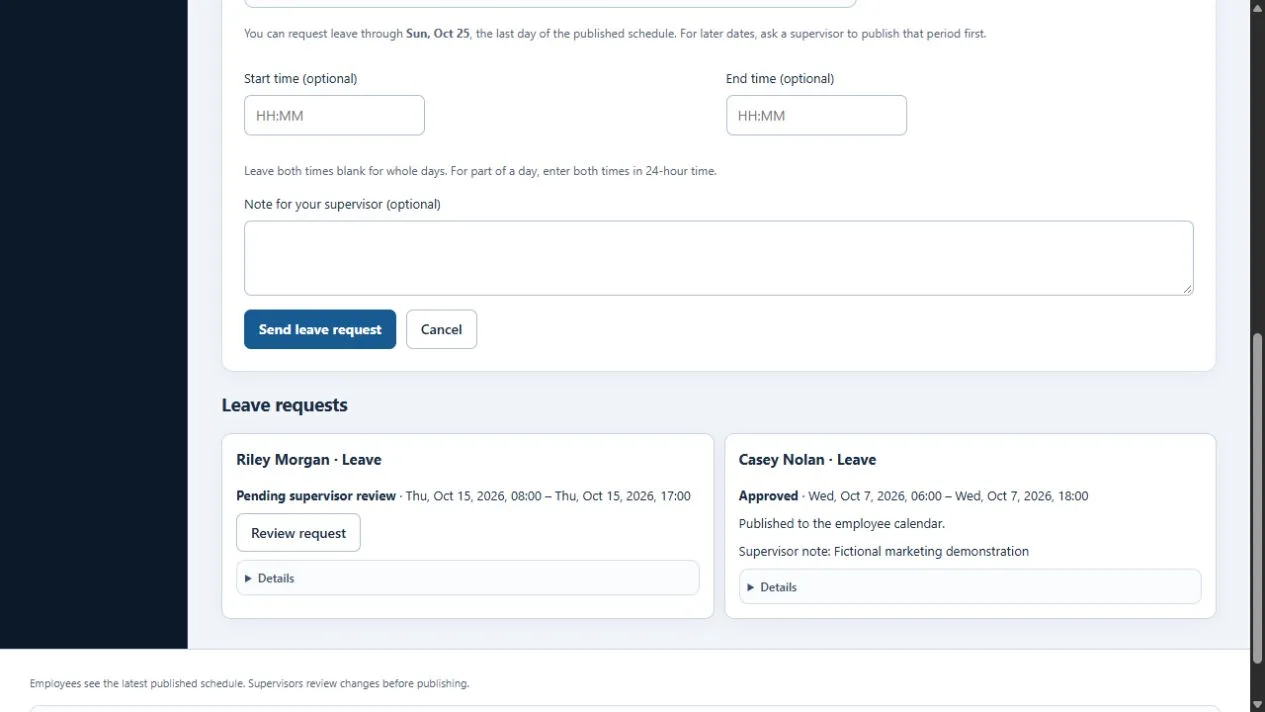
Employees submit leave requests and supervisors review them alongside the schedule before approved leave appears on the calendar.
Place training, court, prisoner transport, and agency events on the same calendar so planned duties do not live in separate silos.
Responsive browser views give supervisors and employees practical schedule access from desktops, tablets, and phones.
04 / Supervisor visibility
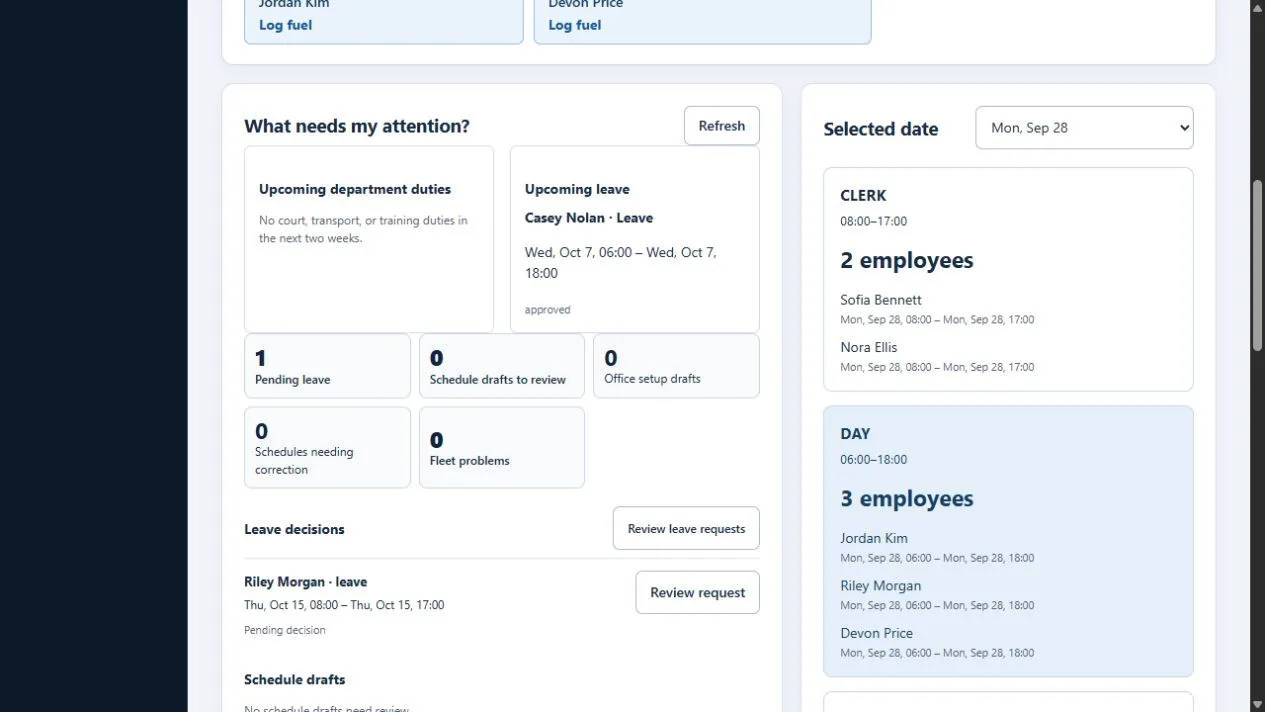
Upcoming leave, staffing counts, schedule drafts, and the people assigned to a selected date stay close together for faster review.
05 / LEAVE WORKFLOW
Employees can submit time-away requests, supervisors can review them, and approved leave becomes part of the shared calendar context.
06 / Operational events
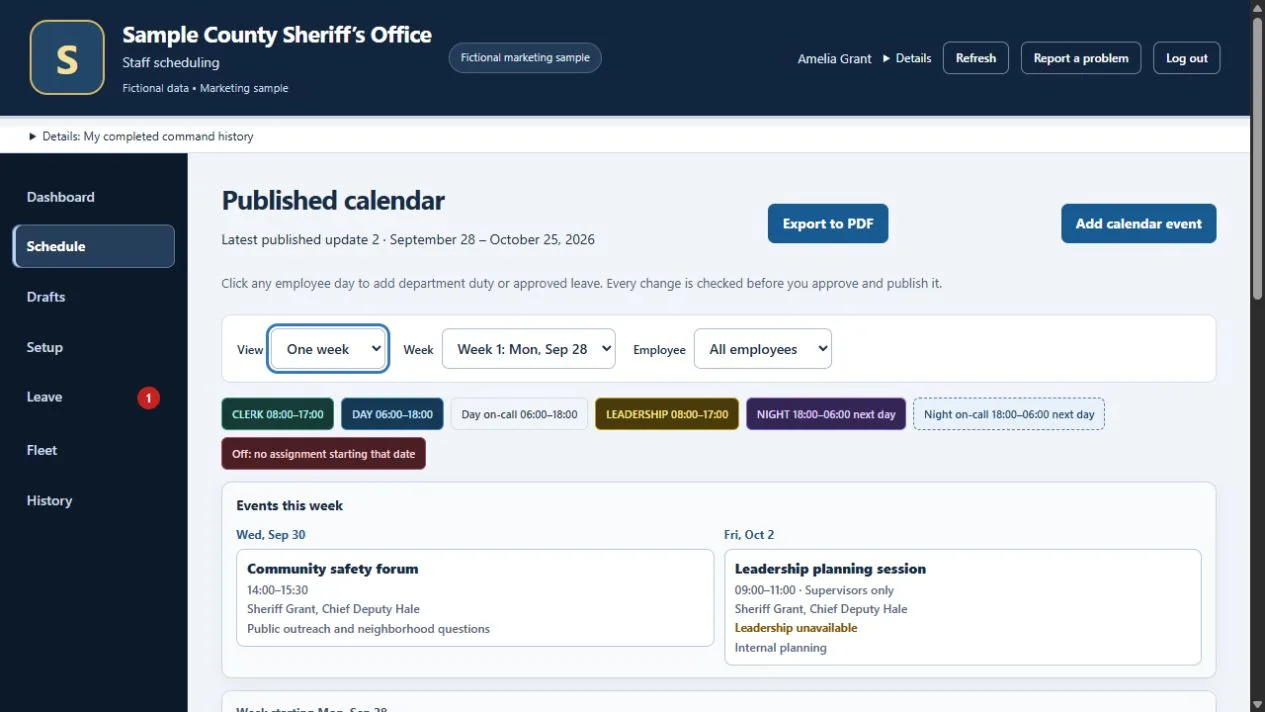
Training, court, prisoner transport, and agency events can sit above the weekly schedule, giving supervisors a better view of what may affect availability.
07 / Clear expectations
Supervisors can review and apply schedule changes. The current release does not automate employee-to-employee shift-trade requests.
The system records planned duty hours and surfaces staffing, overlap, and policy findings so supervisors can recognize potential overtime pressure. Payroll processing and automatic overtime calculation are not active features.
Drafts remain separate from the employee-facing schedule until a supervisor publishes the selected period.
05 / START HERE
Tell us about an operational problem your agency is dealing with. We’ll determine whether software can solve it.
Start a Conversation